


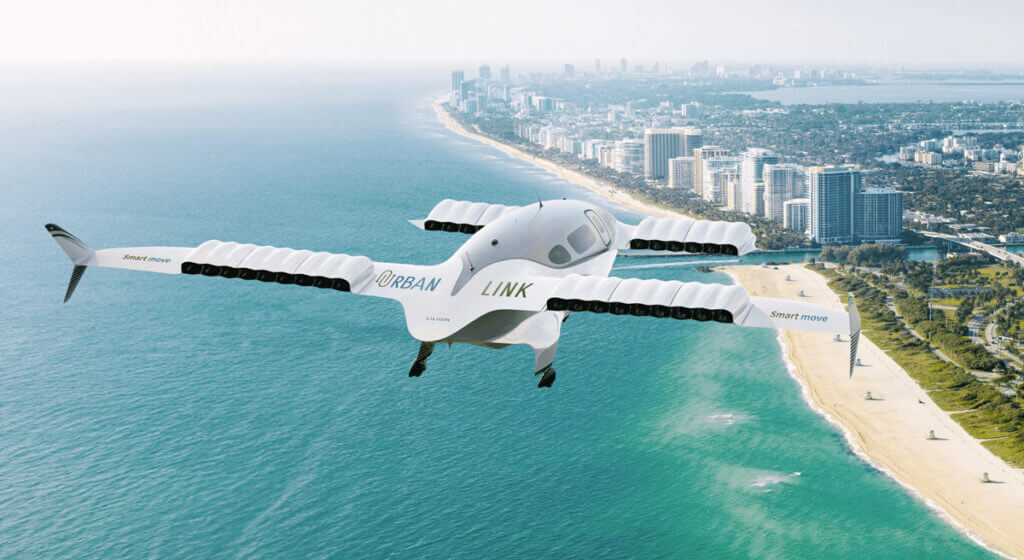
Can you imagine traveling from Málaga to Marbella in just 15 minutes using an autonomous air taxi? It may sound like something out of a Jules Verne science fiction novel, but this could become a reality in a few years with the use of passenger drones. In this futuristic scenario, the Málaga airport is leading the way in advancing new air mobility technologies in Spain.
The state-owned company Enaire, which manages air navigation in Spain, along with its subsidiary Crida, sought an airport to test this new technology. Málaga was immediately interested, according to Raúl Delgado, head of the control tower, who is a pioneer in this field and other areas of aviation research. “We have a team that loves aviation, and we aim to propel the city forward to a position befitting Málaga. The city is a focal point; it is Enaire’s benchmark in Spain for such technology.” Test flights are set to begin by mid-2025, initially with a pilot, though the intention is for them to eventually operate autonomously.
Dos proyectos
The air traffic controllers in Málaga are involved in two leading projects in Europe. The first, known as the Ensure project, researches the safe coexistence of traditional and new air navigation. It develops procedures, legislation, and technology to facilitate the coexistence of drones and airplanes.
El segundo proyecto, OperA, explora cómo puede conectarse el aeropuerto con la movilidad a bordo de los aviones en los centros urbanos, prácticamente de puerta a puerta, garantizando la coexistencia segura de ambos sistemas.
Paseos urbanos
Para el transporte urbano se utilizarán vehículos 100% eléctricos capaces de despegar y aterrizar verticalmente. Inicialmente pilotados, el plan es que sean autónomos a medio plazo. El objetivo, subraya el experto, es que esta nueva movilidad aérea urbana sea accesible, "no sólo para los ricos".
El proyecto OperA también incluye la construcción de un "vertipuerto" en el aeropuerto, similar a un helipuerto para drones. También se crearán estaciones de carga eléctrica de alta potencia. Se está estudiando la posibilidad de una terminal adyacente o el uso de terminales existentes, y Aena, responsable del territorio, está buscando posibles ubicaciones.
Escenario futuro con transporte de drones
“The passenger arrives at Málaga airport from London, passes through the ‘vertiport’ area, and boards a drone that can take him to Granada or Marbella, as well as to his hotel in the city center or his home in the countryside. The flight from Málaga to Marbella using this unmanned air taxi will take between 15 and 20 minutes; to Granada about 50 minutes.
Test Route between Málaga and Granada
The initial test operations will take place between Málaga and Granada, expected to commence in the second half of 2025. The corridors for these operations are already being designed to be compatible with traditional flight routes.
En tres o cuatro años, los pasajeros podrían empezar a embarcar en el servicio de taxi aéreo no tripulado. El marco normativo en la UE avanza rápidamente, pues la demanda y la tecnología ya existen. Además, hay un gran interés de las empresas por un servicio de taxi aéreo no tripulado.
Málaga is a particularly intriguing point for future air taxi operators, mainly because of its potential connections to the Costa del Sol, where there is currently a notable lack of mobility.