


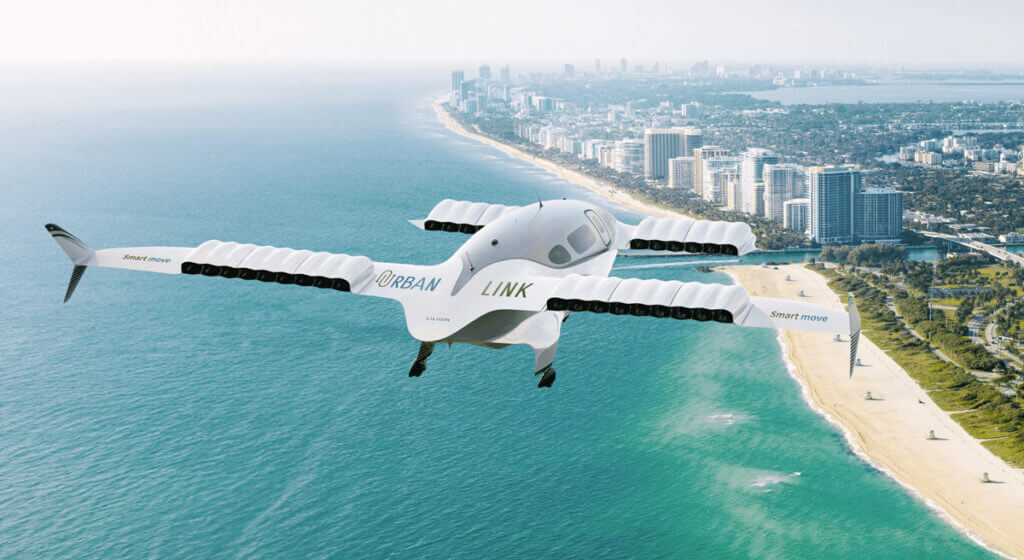
Can you imagine traveling from Málaga to Marbella in just 15 minutes using an autonomous air taxi? It may sound like something out of a Jules Verne science fiction novel, but this could become a reality in a few years with the use of passenger drones. In this futuristic scenario, the Málaga airport is leading the way in advancing new air mobility technologies in Spain.
The state-owned company Enaire, which manages air navigation in Spain, along with its subsidiary Crida, sought an airport to test this new technology. Málaga was immediately interested, according to Raúl Delgado, head of the control tower, who is a pioneer in this field and other areas of aviation research. “We have a team that loves aviation, and we aim to propel the city forward to a position befitting Málaga. The city is a focal point; it is Enaire’s benchmark in Spain for such technology.” Test flights are set to begin by mid-2025, initially with a pilot, though the intention is for them to eventually operate autonomously.
Two Projects
The air traffic controllers in Málaga are involved in two leading projects in Europe. The first, known as the Ensure project, researches the safe coexistence of traditional and new air navigation. It develops procedures, legislation, and technology to facilitate the coexistence of drones and airplanes.
The second project, OperA, explores how the airport can connect with mobility on board aircraft in urban centers, practically from door to door, ensuring that the two systems can coexist safely.
Urban ‘Rides’
For urban transport, 100% electric vehicles capable of vertical takeoff and landing will be used. Initially piloted, the plan is for these to become autonomous in the medium term. The goal, the expert emphasizes, is to make this new urban air mobility accessible, “not just for the wealthy.”
The OperA project also includes the construction of a ‘vertiport’ at the airport, akin to a heliport for drones. High-powered electric charging stations will also be established. The possibility of an adjacent terminal or the use of existing terminals is being explored, with Aena, responsible for the territory, searching for potential locations.
Future Scenario with Drone Transport
“The passenger arrives at Málaga airport from London, passes through the ‘vertiport’ area, and boards a drone that can take him to Granada or Marbella, as well as to his hotel in the city center or his home in the countryside. The flight from Málaga to Marbella using this unmanned air taxi will take between 15 and 20 minutes; to Granada about 50 minutes.
Test Route between Málaga and Granada
The initial test operations will take place between Málaga and Granada, expected to commence in the second half of 2025. The corridors for these operations are already being designed to be compatible with traditional flight routes.
Within three or four years, passengers could begin boarding the unmanned air taxi service. The regulatory framework in the EU is rapidly advancing as the demand and technology already exist. Moreover, there is significant interest from companies in an unmanned air taxi service.
Málaga is a particularly intriguing point for future air taxi operators, mainly because of its potential connections to the Costa del Sol, where there is currently a notable lack of mobility.